Is your car key becoming difficult to turn in the ignition or door lock? Before replacing the lock, it might be worth taking a closer look at the key itself.
At Lockwise Locksmiths, we’ve seen how worn, damaged and incorrectly duplicated keys can contribute to problems with vehicle locks. In some cases, the customer believes the ignition barrel or door lock is failing when the problem actually starts with the key they’re using.
One of the biggest issues is the way replacement keys are made. Simply copying an existing key doesn’t necessarily produce a correctly cut replacement, particularly when the original has already experienced years of wear.
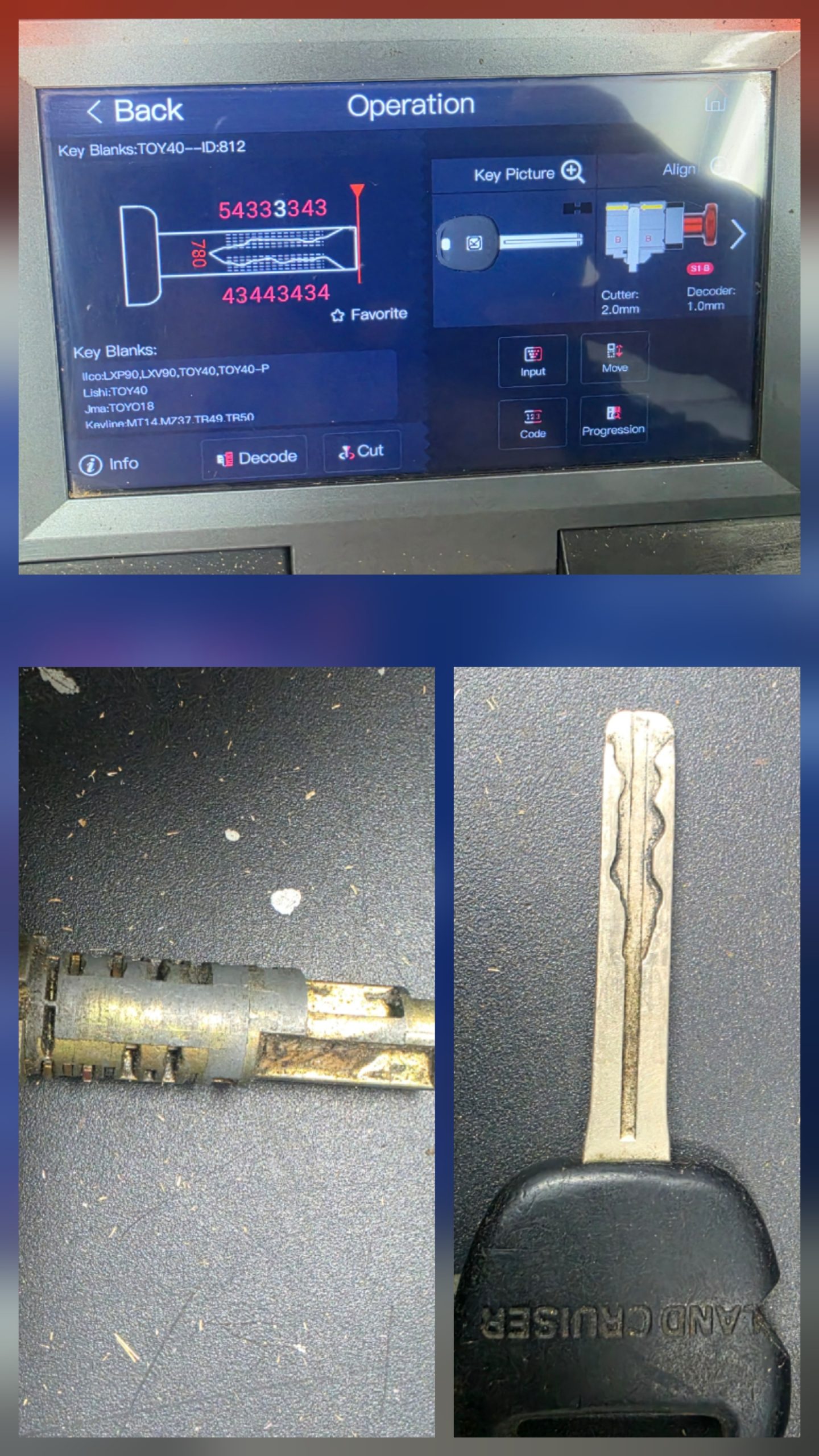
As experienced automotive locksmiths, we take a different approach wherever possible. Rather than simply duplicating the wear and inaccuracies of an existing key, we can decode its cuts and produce a replacement closer to the manufacturer’s original specifications.
Here’s why that matters.
The Problem With Copying an Already Worn Car Key
Every time a conventional mechanical car key is inserted into a lock, its cut surfaces interact with the internal components of the cylinder.
Over time, keys can develop wear, particularly around the cuts that operate the lock’s wafers.
When a worn key is duplicated using a conventional key-copying machine, the new key may reproduce some of those worn dimensions.
This becomes a bigger problem when keys are copied repeatedly.
For example:
- The original factory key is cut to the correct depths.
- After years of use, some of its cuts become worn.
- A replacement is duplicated from that worn key.
- Years later, another key is copied from the replacement.
- Small inaccuracies may be transferred or introduced during each duplication.
Eventually, a key may look perfectly usable but no longer operate the lock as smoothly as it should.
Not every duplicated key will develop this problem. A correctly maintained machine, suitable cutting equipment and an accurate original key can produce excellent duplicates. However, copying an already worn or inaccurate key can reproduce existing problems.
How Incorrect Key Cutting Can Affect Your Car’s Locks
Most conventional automotive lock cylinders contain small components called wafers.
When the correct key is inserted, its cuts position these wafers so the cylinder can rotate.
For the lock to operate smoothly, the key needs to position the wafers accurately.
If a key has been cut too deeply, too shallowly or with incorrect spacing, some wafers may not align properly.
This can result in:
- Difficulty inserting or removing the key.
- A key that needs to be jiggled before it turns.
- An ignition barrel that occasionally catches.
- A door lock that becomes difficult to operate.
- Increased friction and wear inside the cylinder.
- A key that works in one lock but not another.
The last problem is particularly interesting.
A worn ignition barrel may continue accepting a worn key because both components have experienced years of use together. However, the same key may not operate a less frequently used door lock.
Customers sometimes assume the door lock is faulty when the key itself is no longer within its intended cutting tolerances.
Can a Worn Car Key Actually Damage the Lock?
Yes. An incorrectly cut or excessively worn key can contribute to accelerated wear in a mechanical lock.
When wafers don’t align correctly, they may catch or drag against the cylinder as the key is turned.
Repeated operation under these conditions can increase wear on the wafers, their contact surfaces and the cylinder components.
In some automotive lock designs, this can also contribute to wear around the wafer pockets.
Over time, the lock may become increasingly difficult to operate.
However, it’s important to understand that key wear isn’t responsible for every ignition or door lock failure. Worn wafers, damaged components, contamination, lubrication problems and other mechanical faults can produce similar symptoms.
That’s why identifying the actual cause matters before replacing parts.
Why We Prefer Cutting Car Keys Back to Factory Specifications
This is one of the differences in how we approach automotive key cutting at Lockwise Locksmiths.
When a customer brings us a worn car key, we don’t automatically assume that copying its existing cuts is the best solution.
For many vehicle keys, we can examine and decode the original cuts to determine the correct key combination.
We can then use our electronic key-cutting equipment to produce a replacement using the manufacturer’s intended spacing and depth specifications.
This process is commonly referred to as cutting a car key by code.
Rather than simply tracing the physical shape of an old key, code cutting uses the appropriate key-cutting information to produce accurate cuts.
An Example of the Difference
Imagine a car key that was originally cut to a particular depth but has become shallower through wear at one position.
A conventional duplication machine may reproduce that worn profile.
A correctly decoded key, cut by code, can restore that position to its intended depth.
The result is a replacement key that is closer to the original manufacturer’s specifications rather than a fresh copy of an old problem.
Of course, this depends on the key system, the condition of the original and whether the correct key combination can be reliably determined.
Some older or unusual key systems require a different approach.
Why a Brand-New Car Key Can Still Cause Problems
A common misconception is that if a key has just been cut, it must be correct.
Unfortunately, a new key can still have inaccurate cuts.
Key-cutting accuracy depends on several factors, including the condition and calibration of the machine, the correct key blank, the quality of the original key and the operator’s ability to identify problems.
Even small variations in cutting depth can affect how the wafers sit inside a lock.
This is particularly important with vehicle locks, where accurate mechanical operation is essential.
A properly trained automotive locksmith understands not only how to cut a key but also how the key interacts with the internal components of the lock.
That knowledge becomes especially useful when diagnosing an ignition barrel that catches, a key that works intermittently or a replacement that doesn’t operate every lock on the vehicle.
Should You Replace Your Ignition Barrel or Just the Key?
If your ignition key is becoming difficult to turn, replacing the entire ignition barrel shouldn’t automatically be the first step.
An experienced automotive locksmith can assess the condition of the key and lock to help determine where the problem originates.
Sometimes, producing an accurately cut replacement key is enough to restore smooth operation.
In other cases, the lock may already have significant internal wear and require servicing, repairs or replacement components.
And sometimes, the problem isn’t the key or mechanical barrel at all.
For example, certain vehicles experience ignition switch, steering lock or electrical faults that can be mistaken for a mechanical key problem.
At Lockwise Locksmiths, our approach is to identify the fault rather than simply replace components based on symptoms.
A new key won’t repair a physically damaged lock, but a correctly cut key can help eliminate one potential cause of the problem.
What About House Keys and Residential Locks?
Although automotive locks are a particularly good example, the same basic principle applies to many residential locks.
A house key that has been repeatedly duplicated from worn copies may gradually lose accuracy.
Depending on the type of cylinder, inaccurate cuts can prevent the internal pins or other locking components from aligning correctly.
The result may be a key that becomes difficult to turn or works inconsistently.
During residential locksmith work, we sometimes encounter customers who believe their door lock is faulty when the problem is actually an inaccurate or worn key.
This is one reason it’s worth having a qualified locksmith assess both the key and the cylinder before deciding that the lock needs replacement.
When Should You Have Your Car Key Checked?
You don’t necessarily need to wait until your key stops working completely.
Consider having it checked if:
- Your ignition key needs to be jiggled before it turns.
- A recently duplicated key doesn’t work as smoothly as the original.
- Your key operates the ignition but struggles in the door lock.
- The key is visibly worn, bent or damaged.
- You’ve had several replacement keys copied from older copies.
- Your ignition or door lock occasionally catches when turning.
Continuing to force a key that isn’t operating correctly can make an existing mechanical problem worse.
Getting the key and lock checked early may prevent a more expensive repair later.
Automotive Key Cutting at Lockwise Locksmiths
Lockwise Locksmiths is a family-owned locksmith business based in Hillcrest, servicing Browns Plains, Logan and Brisbane’s southside.
Our automotive locksmith services include replacement car keys, spare keys, transponder programming, remote key replacement, vehicle lock repairs and ignition repairs.
We use specialist automotive key-cutting and diagnostic equipment, supported by years of hands-on locksmith experience.
Where the vehicle’s key system allows, we aim to cut replacement keys to the correct factory specifications rather than simply duplicate wear from an existing key.
This approach is particularly valuable when dealing with older vehicles, worn ignition keys and customers who have experienced problems with previous key copies.
Whether you need a spare car key or you’re experiencing problems with an ignition barrel, we can help assess the key and lock before recommending the appropriate solution.
Visit our Hillcrest locksmith workshop for car key cutting, or contact Lockwise Locksmiths to discuss mobile automotive locksmith services across Brisbane’s southside and Logan.
Frequently Asked Questions
Can a worn car key damage an ignition barrel?
Yes. A worn or incorrectly cut key can cause wafers to sit incorrectly inside certain ignition cylinders. Repeated operation may increase friction and contribute to premature wear. However, other mechanical faults can also cause ignition problems.
Is cutting a car key by code better than copying it?
When the original key is worn or inaccurate, cutting by a correctly determined key code can produce a replacement closer to factory specifications. Conventional duplication can still be suitable when the original key and cutting equipment are accurate.
Why does my car key work in the ignition but not the door?
The ignition and door locks may have different levels of wear, and some vehicle locks use different combinations of the available key cuts. A worn key may operate one cylinder but struggle in another. Internal lock damage is another possibility.
Can you make a factory-specification car key from a worn key?
For many vehicles, yes. An automotive locksmith can decode the existing key and determine the intended cutting depths. In some situations, additional information or examination of the lock may be necessary.
Will a new car key fix a sticking ignition?
It may, if the sticking is caused by an inaccurate or excessively worn key. If the ignition cylinder has damaged wafers or other mechanical faults, repairs may also be necessary.
Where can I get a replacement car key cut in Brisbane?
Lockwise Locksmiths provides automotive key cutting and programming from our Hillcrest workshop, conveniently located near Browns Plains. We also offer mobile automotive locksmith services throughout Brisbane’s southside and Logan.